


Functional Units
The National Payment Systems (NPS) function recognises that human resources are critical to the achievement of its short, medium and long-term objectives. Accordingly, the effective coordination of the following functional units is fundamental to the successful delivery of payment system goals.
- Operations and Support (RTGS, CSD and Clearing House Systems)
- Oversight and Risk Management
- Policy and Research
Operations Unit
Overview
The Operations Unit is primarily responsible for the administration and operation of the Large Value Payment Systems (LVPSs) in Zimbabwe. These include the Zimbabwe Electronic Transfer and Settlement System (ZETSS), the Real Time Gross Settlement (RTGS) system, and the Central Securities Depository (CSD) for government securities. The Unit also oversees Clearing House activities.
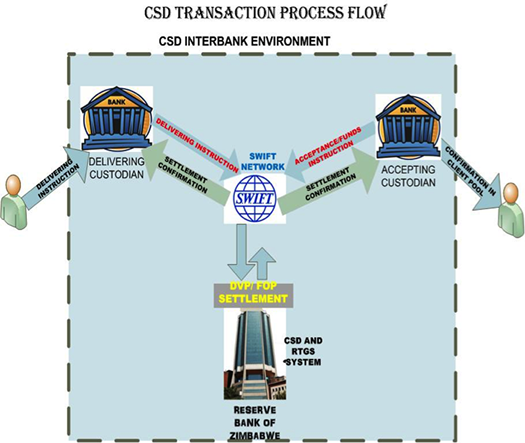
In addition, the Unit manages the ZETSS and CSD Customer Support Centre, which ensures that all payment systems related queries are logged and resolved timeously. The CSD is interfaced with the RTGS system to facilitate Delivery versus Payment (DvP) and enhance collateral management.
Zimbabwe Electronic Transfer and Settlement System (ZETSS)
ZETSS was launched in 2002 and serves as the country’s primary settlement hub for high-value and time-critical transactions.
Architecture
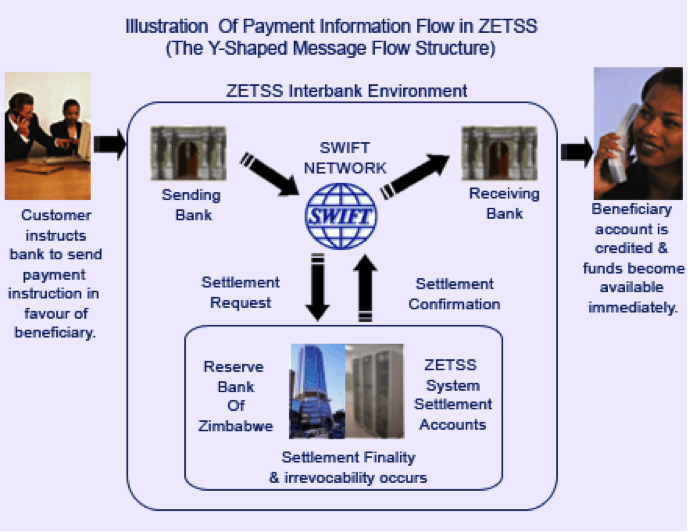
Benefits of ZETSS
- Provides a secure settlement system for the country
- Reduces systemic and settlement risk in the payment system
- Enhances liquidity management for participants
- Improves overall efficiency of the payment system
- Provides timely and accurate transaction data
Central Securities Depository (CSD)
The Central Securities Depository for government securities was launched in 2006. It manages government stocks, bonds and bills including Treasury Bills (TBs), Open Market Operations (OMO) bills and other instruments issued by the Government.
Architecture
Benefits of the CSD System
- Improved operational efficiency through Delivery versus Payment (DvP)
- Reduced risk through immobilisation and dematerialisation of securities
- Enhanced collateral management
- Effective monitoring of government securities
Cheque Clearing House
The Reserve Bank of Zimbabwe manages the national cheque clearing house system, which operates on working weekdays in the two major cities of Harare and Bulawayo.
ZETSS, CSD and Cheque Operating Rules
Operations of ZETSS, CSD and the Cheque Clearing House are governed by agreed standards as set out in the respective operating rules. Participants are required to maintain appropriate technical capacity, including adequate contingency arrangements, to ensure uninterrupted system operations.
Oversight and Risk Management
Oversight Overview
Oversight of payment, clearing and securities settlement systems is a core central bank function aimed at promoting safety and efficiency. This is achieved through monitoring existing and planned systems, assessing them against applicable standards, and inducing change where necessary, in line with BIS principles.
Oversight activities comprise both off-site analysis and on-site inspections, supported by ongoing monitoring of compliance across recognised systems.
The Reserve Bank applies a risk-based approach complemented by benchmarking against international best practices to ensure continuous improvement and resilience of payment systems.
Oversight Scope
Oversight focuses primarily on Systemically Important Payment Systems (SIPS) and System-Wide Important Payment Systems (SWIPS).
SIPS include high-value, low-volume and time-critical systems such as RTGS and securities settlement systems, while SWIPS comprise high-volume, low-value retail payment systems including cheque, card, mobile, internet and emerging electronic payment streams.
- Payment, clearing and securities settlement system providers
- Financial institutions and system participants
- Payment instruments (paper-based and electronic)
- Third-party service providers including agents, merchants and critical service providers
Policy and Research
Overview
The Policy and Research Unit supports payment system policy formulation through evidence-based research and strategic recommendations aligned with regional and international developments.
The Unit contributes to the development of payment system standards and operating procedures within a rapidly evolving technological environment, ensuring that Zimbabwe’s payment systems remain robust, inclusive and future-ready.